Stamped concrete gives you the look of flagstone, slate, brick or wood with the strength and lower upkeep of poured concrete. Concrete Commandos Bee Cave installs stamped patios, driveways, walkways and pool decks for Bee Cave and Lake Travis homes, with the color work and sealing that make the finish last.
What stamped concrete is
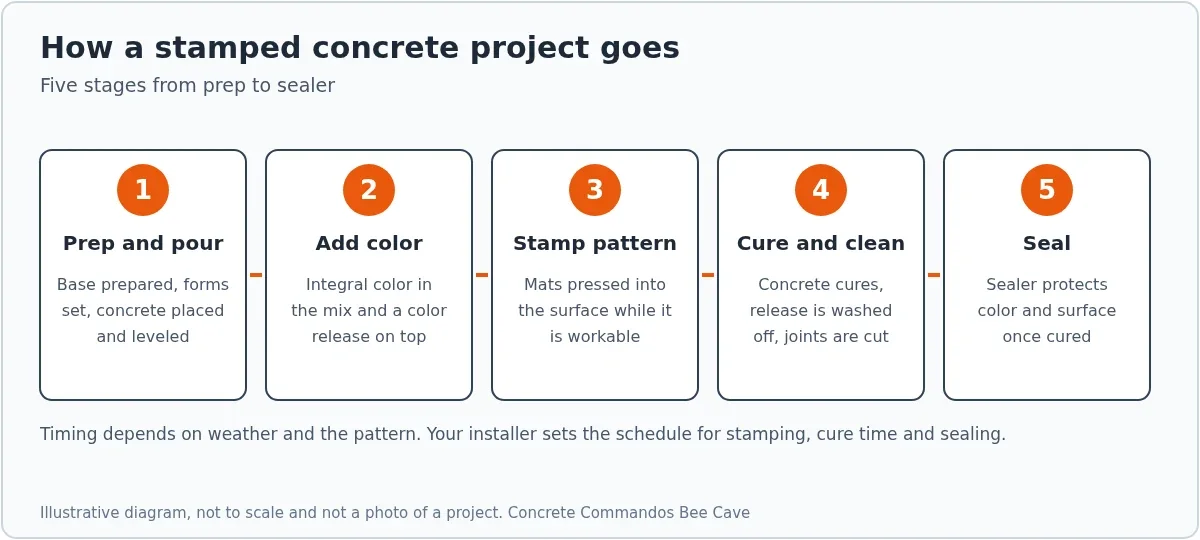
Stamped concrete starts as a normal poured slab. While the concrete is still workable, color is added and texture mats or stamps are pressed into the surface to create a pattern. After the concrete cures, joints are cut where needed, the surface is cleaned and a sealer is applied. The result is one continuous slab with the look of natural stone or pavers, without the individual stones that can shift or grow weeds.
Where it works well
- Patios: the most common use, from a simple stone-look slab to a multi-level entertaining space.
- Pool decks: textured surfaces give traction, and lighter colors stay more comfortable underfoot.
- Driveways: a stamped border or a full pattern for curb appeal.
- Walkways and entries: a front path or porch that matches the character of the home.
- Outdoor kitchens and fire pit areas: pattern and color that tie the space together.
Pattern choices
The pattern should suit your home's architecture. Many Hill Country homes use natural limestone and earth tones, so stone and slate looks are popular.
- Ashlar slate and flagstone: irregular stone looks that fit natural Hill Country settings.
- Cobblestone and brick: classic patterns for entries and driveways.
- Wood plank: the look of decking without rot or refinishing.
- Seamless texture: a stone or skin texture with no visible joint lines.
Color and sealing
Color in stamped concrete usually comes from two sources: integral color mixed into the concrete, and a release agent or stain that adds natural variation and the antique highlights between stones. Together they give depth that a single flat color cannot. We bring color samples and help you choose tones that work with your roof, stone and landscaping.
Sealer is not optional on stamped concrete. It protects color, resists stains and gives the surface a finish from matte to glossy. Many sealers need to be reapplied every few years, depending on sun and traffic. A slip-resistant additive can be included for wet areas such as pool decks.
Texas conditions to plan for
Stamped concrete is installed at the right time of day and in the right weather. In summer heat the concrete sets faster, so crew timing and curing matter. Rain on a fresh pour can damage the surface, so we watch the forecast. Stamped slabs are still concrete, so they can develop hairline cracks along planned joints. Joint layout is part of the pattern design for this reason.
Stamped concrete or pavers?
Pavers can be lifted and repaired individually, while stamped concrete forms a single slab that does not shift or grow weeds between joints. Stamped concrete typically needs resealing, while pavers may need re-leveling and joint sand. We are happy to explain which choice fits your yard and budget, including when plain concrete is the better answer.
How a stamped pour goes
Stamped concrete is a multi-step job, and the order matters. Knowing the steps helps you plan around the work.
- Design and layout: pattern, color, borders and joint lines are chosen before the pour, using samples and, for larger jobs, a test area.
- Base and forms: the base is graded and compacted, forms are set to the planned slope and reinforcement is placed.
- Pour and finish: colored concrete is placed and leveled, and the surface is floated and prepared.
- Color and release: a color hardener or release agent is applied so the stamps do not stick and the pattern shows depth.
- Stamping: mats are pressed into the concrete at the right moment, and edges and corners are detailed by hand.
- Cure, clean and cut: after the concrete has cured, the release is washed off and joints are cut where planned.
- Seal: a sealer is applied once the surface is clean and dry.
Timing is a big part of the work. The window for stamping is short, and weather, wind and heat all shorten it. That is why a stamped job is best handled by a crew that is ready to finish it quickly.
Caring for stamped concrete
- Sweep and rinse regularly. Pollen, leaves and fertilizer stain sealed concrete less when cleaned off promptly.
- Use mild cleaners rather than harsh acids or heavy pressure washing, which can dull sealer and wear color.
- Reseal when the surface looks dull or water stops beading. Many surfaces need a new coat every few years.
- Avoid ice-melting chemicals and keep planters from sitting directly on the sealed surface for long periods.
HOA notes
Pattern and color may need HOA approval in neighborhoods such as Steiner Ranch and Barton Creek. Bring samples or photos to the review, and we will help you prepare them.
What affects stamped concrete cost
Stamped work has more steps than plain concrete, so the estimate reflects them. No prices are shown here, only the factors:
- Pattern and borders: a simple pattern differs from layered borders and accents.
- Color: base color, release color and any staining add steps.
- Area and shape: large or curved areas need careful planning for joints and stamp placement.
- Sealer: the type and number of coats affect appearance and upkeep.
- Existing slab and site: demolition, access and grade change the work.
Keeping stamped concrete looking good
Sealer protects color and texture, but it wears with sun and traffic. Resealing intervals vary by product, so follow the sealer maker's directions, clean the surface first and keep harsh chemicals off it. Stamped concrete can still crack like any slab, which is why control joints are placed along pattern lines where possible. If a stamped slab has settled or cracked, repair options depend on the cause.
Where stamped concrete fits
Stamped finishes are common on patios, pool decks, walkways and driveway borders on a driveway. HOA rules often cover color and pattern, so ask early in West Lake Hills, Barton Creek and Steiner Ranch. A plain broom finish can also be paired with a stamped border for a lower-effort look.
Frequently asked questions
How long does stamped concrete last?
With good base prep, proper joints and regular sealing, stamped concrete can last for many years. The surface color and sealer wear first, and resealing is the usual maintenance.
Is stamped concrete slippery when wet?
It can be if sealed with a glossy finish. For wet areas such as pool decks we use a slip-resistant additive and a lower-gloss sealer for better traction.
Will stamped concrete crack?
Any concrete can crack. Control joints are cut into the pattern so any cracking happens along planned lines. Hairline cracks that follow those lines are normal and often hard to notice.
Can you stamp over my existing concrete?
Sometimes a thin overlay can be stamped over a sound slab, but cracked or heaving concrete should be repaired or replaced first. We will look at the slab before recommending an approach.
How often do I need to reseal stamped concrete?
Many installers recommend resealing every few years, depending on sun exposure and foot traffic. Cleaning before resealing helps the new coat bond.
Can I choose any color?
Within reason. Color will look different wet and dry, and in sun and shade. We use samples and often a test area so you can approve the look before the full pour.
Where we pour stamped concrete
We serve Bee Cave and nearby communities. Each area page covers local neighborhoods and permit notes: